Pre-Production
Pre-Production, in general, is the stage that takes the most time and effort for “The Chet Show.” Spanning a few months, an episode in pre-production is handled by two groups, the writing team, and the prop design team. Writing led by Candice Leach would account for and take advantage of the low-budget student-led nature of the show’s production. The prop and storyboarding department led by Michael Losquadro follows a complementary approach, utilizing the time provided after writing to visualize the script and begin the starting stages of producing the episode.
Writing
The writing process for “The Chet Show” is very non-traditional. On a typical sitcom, anywhere from 8-24 episodes are written and produced at the same time. The smaller-scale student production of Chet means that each episode is written in order, after the previous one had been released. This has created a much more reactive writers’ room, where the strengths of the actors and the things that the audience responds well to can be caught and played with more, almost like a feedback loop, which would only happen after multiple seasons of a traditional sitcom.
This is far from the only thing that separates the writing of Chet from a regular sitcom. The idea has always been to use the lens and the language of a typical sitcom to tell a much deeper story about identity and self-actualization. Each episode, then, needs to follow the structure of a sitcom episode, with each character slotting conveniently into the role they need to fulfill to push the story along, and follow Chet’s discomfort with the role he’s supposed to be playing in the show.
Storyboards
Storyboards, done by Michael Losquadro, were started after Candice’s script was finished. Storyboards follow a fairly typical layout and are followed fairly strictly with the production pipeline. On a few occasions the scenes are started with storyboards, such as the opening scene of “Chet Goes to the Doctor” and the gas station scene from “Chet Goes to a Party”
Prop-Design
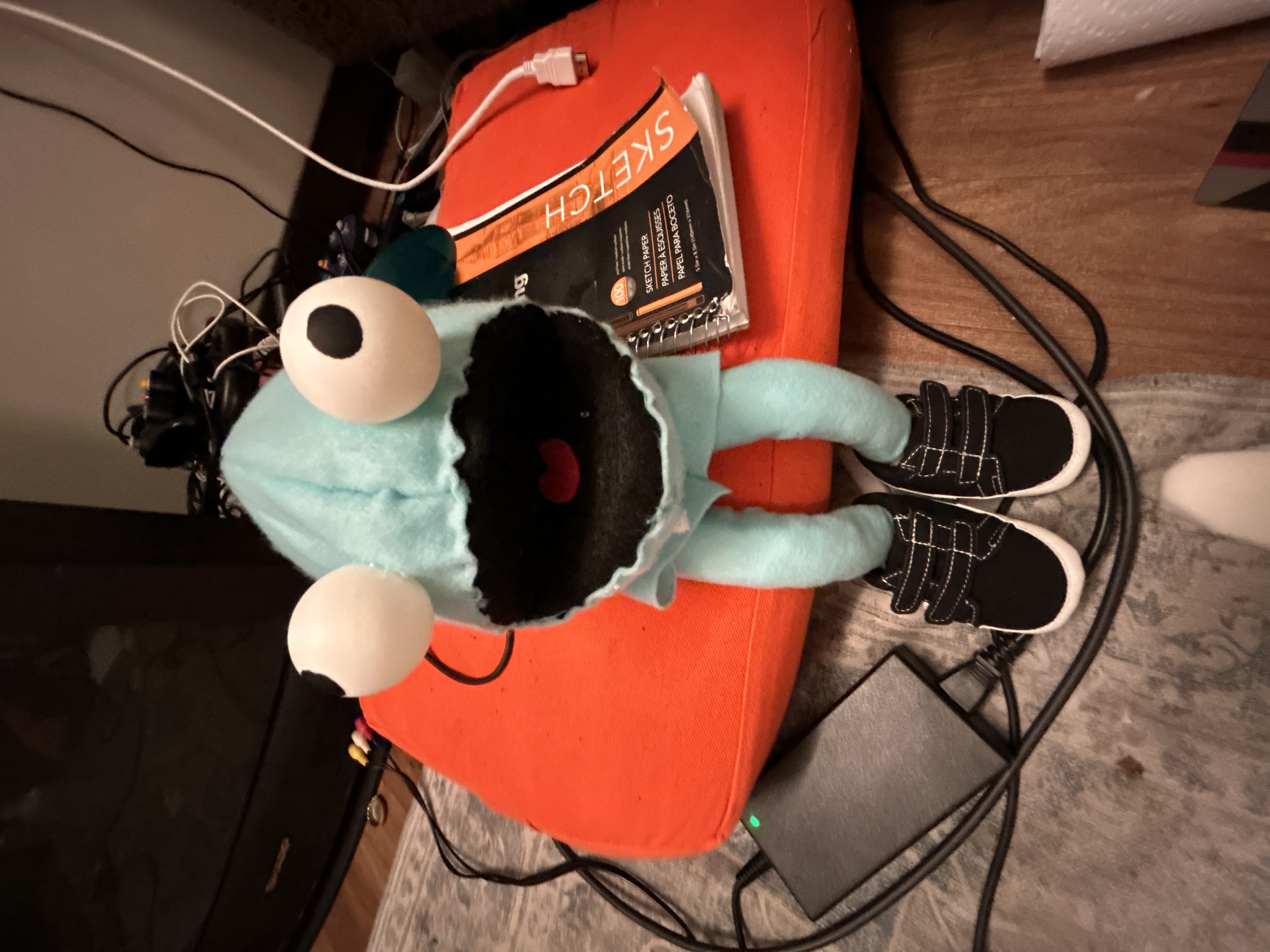
The prop department consists of a very small team, with people typically being brought on for very specific reasons. Led by Michael, majority of the props are handled solo, items like the darth vader helmet and fake ID from “Chet Goes to a Party” are great examples of this. While more elaborate items such as the puppet show stage from “Chet Falls in Love” as well as the puppets themselves typically have 2-3 people working on them at a time.
With minimal time devoted to the Prop-Design segment of the project, a lot of props are produced a day or two before use on set. While more elaborate props often have overlapping production periods, where handoffs between prop designers are utilized to create the best items as fast as possible. A good example of this comes from Chet 3, where the production of the puppet show stage overlapped with the manufacturing of Chet’s black hoodie.
Here are a couple of the most interesting and involve props made throughout the series as well as those who worked on them:
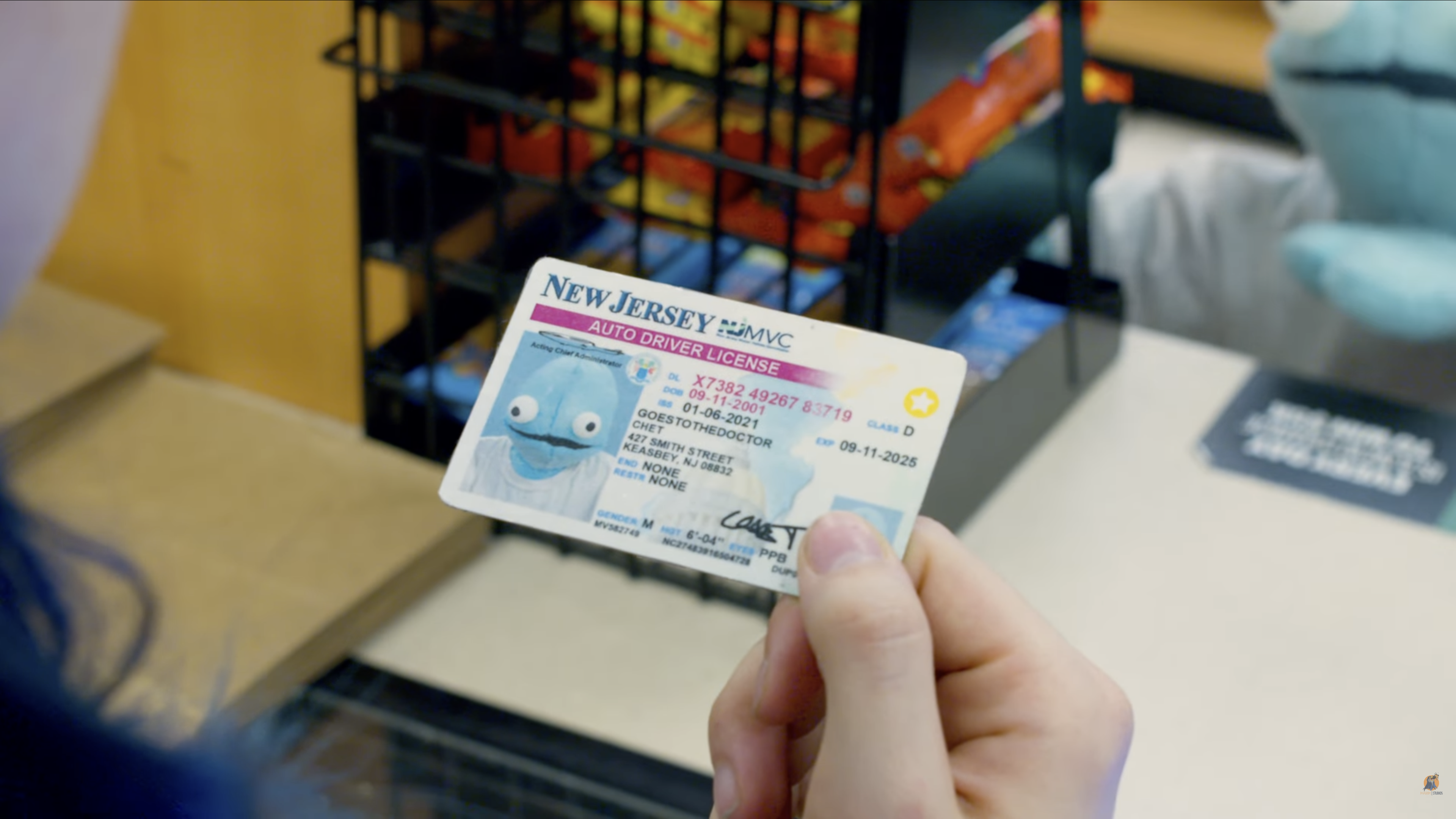
Fake ID - Created by Michael Losquadro
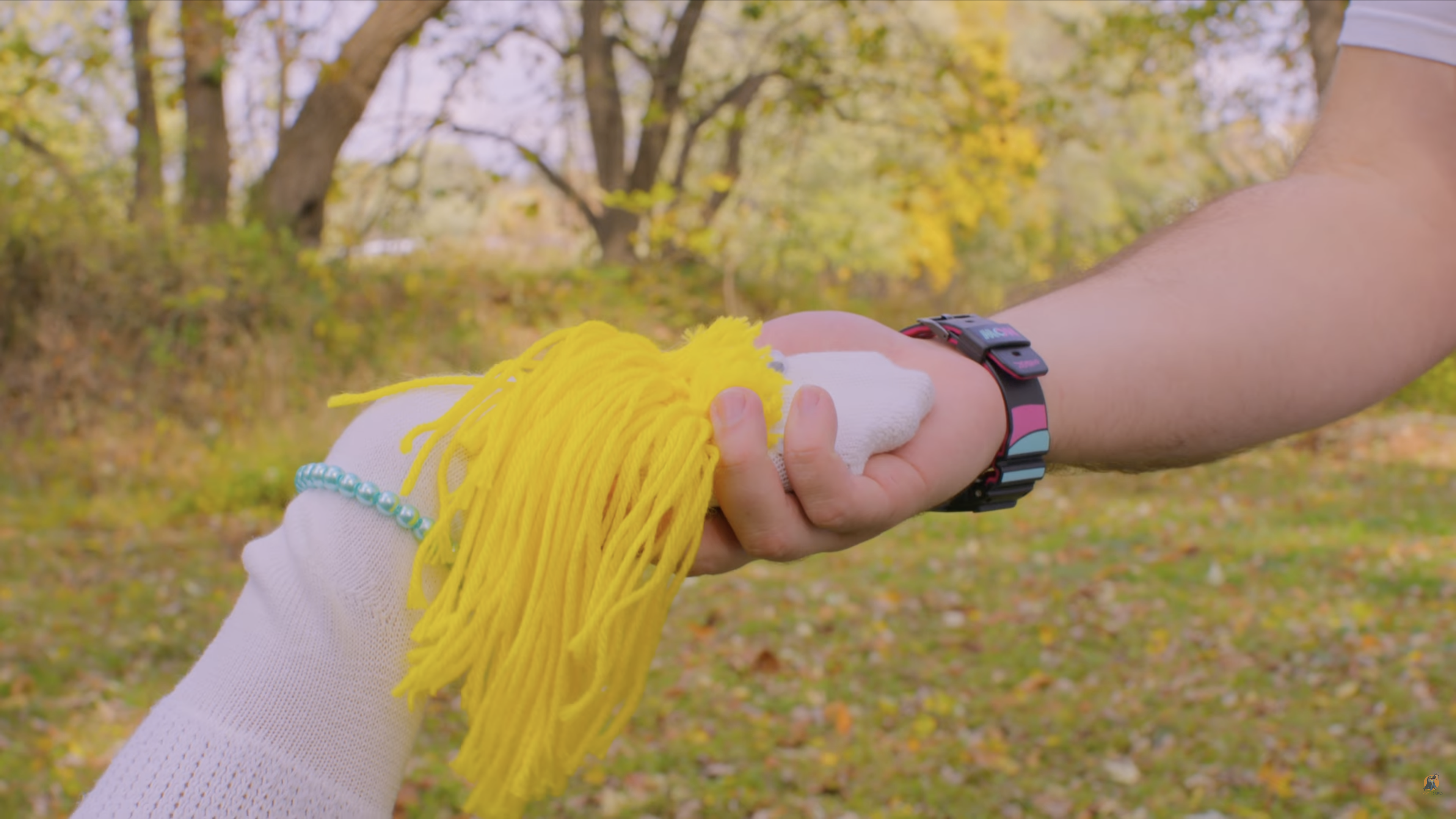
Sockina - Created by Michael Losquadro and Samantha Cooper
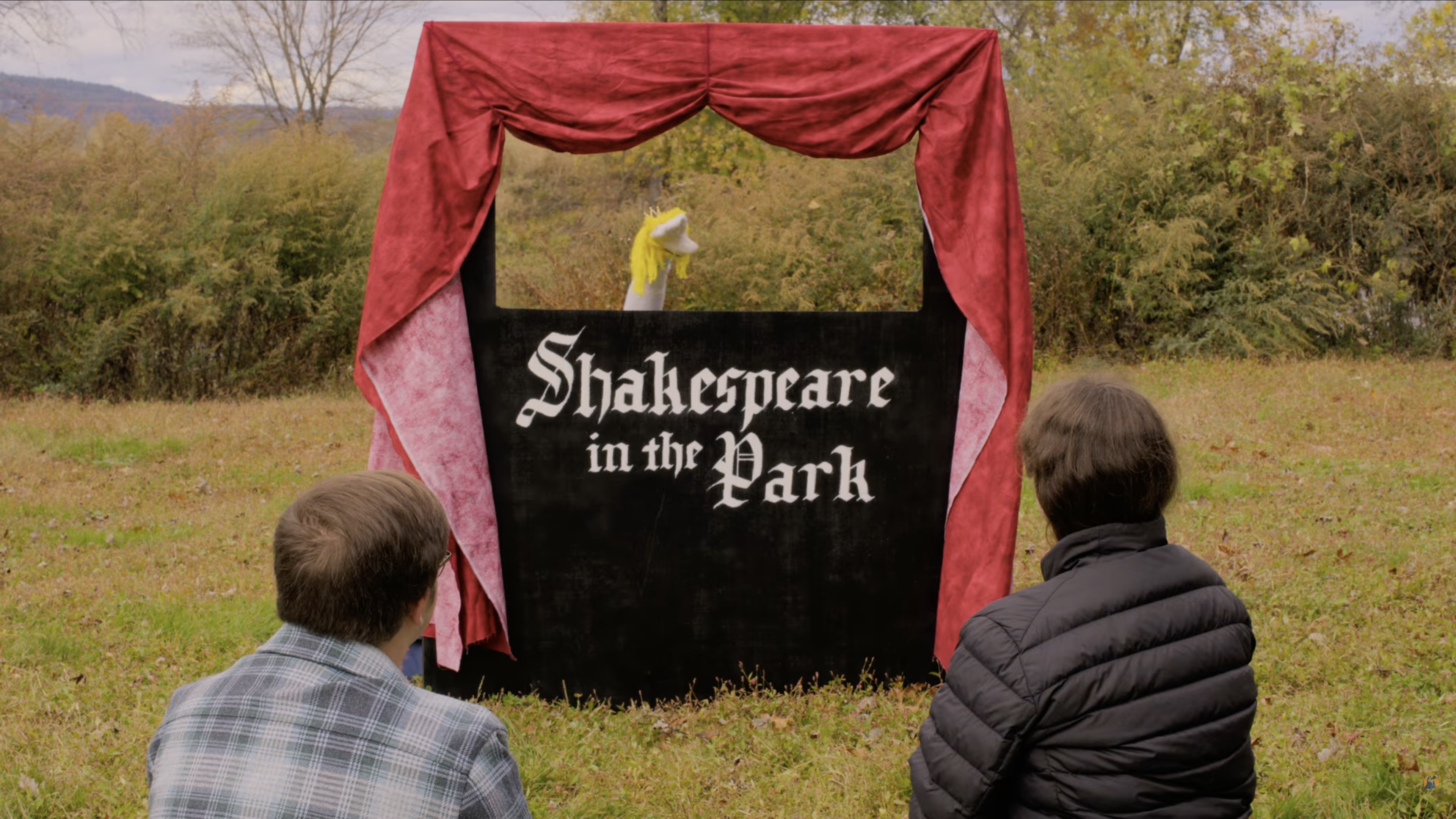
Puppet Show Stage - Created by Michael Losquadro, Jazmin Corrujedo, and Dan Stevens
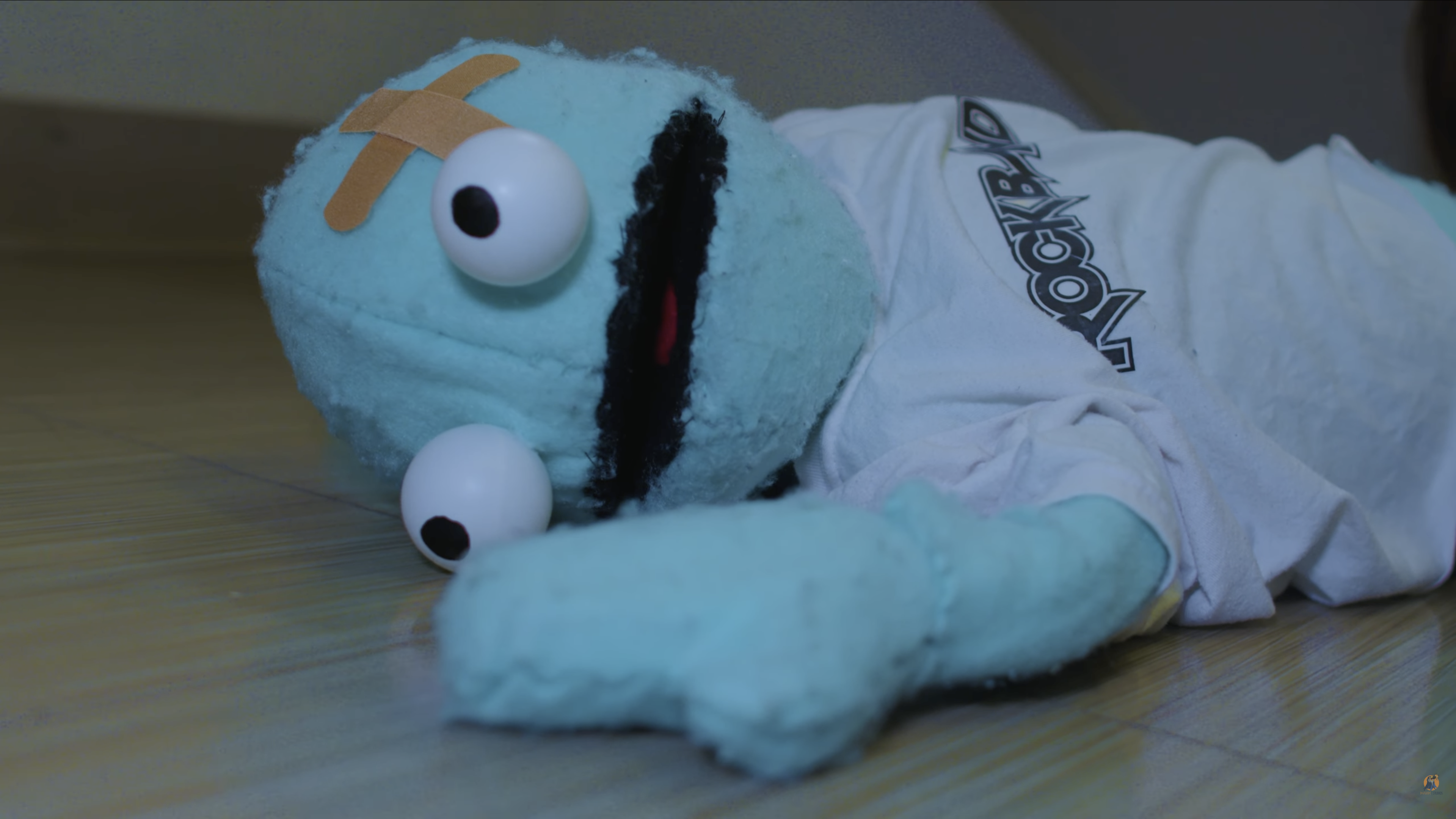
Chet - Created by Michael Losquadro and Demetria Boussios
Casting
Before “Chet Goes to the Doctor,” Michael and Candice would pass the role of Chet back-and-forth, coming up with different voices, and trying to turn this prop into a distinct character. The first “Chet” project, a series of still photographs for Michael’s class project, had Candice playing Chet's roommate:
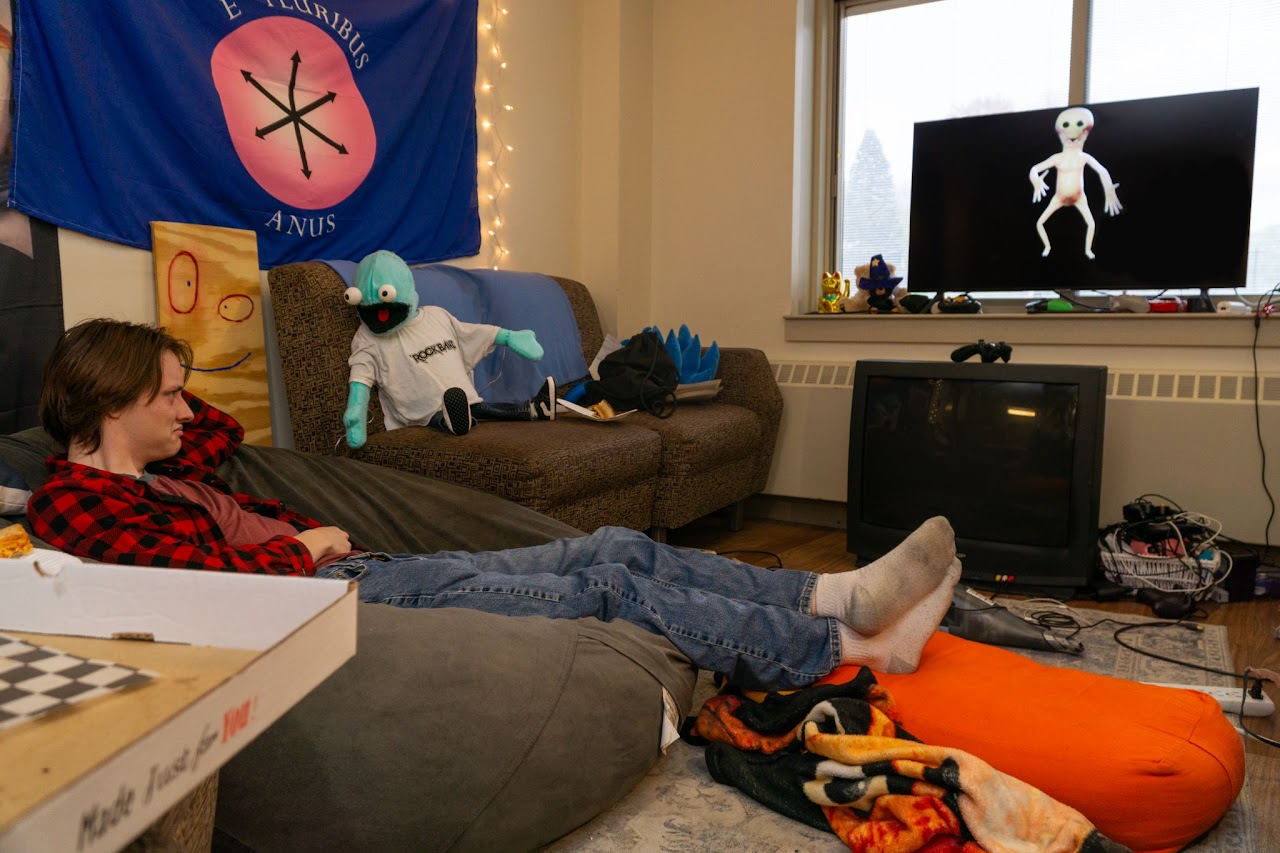
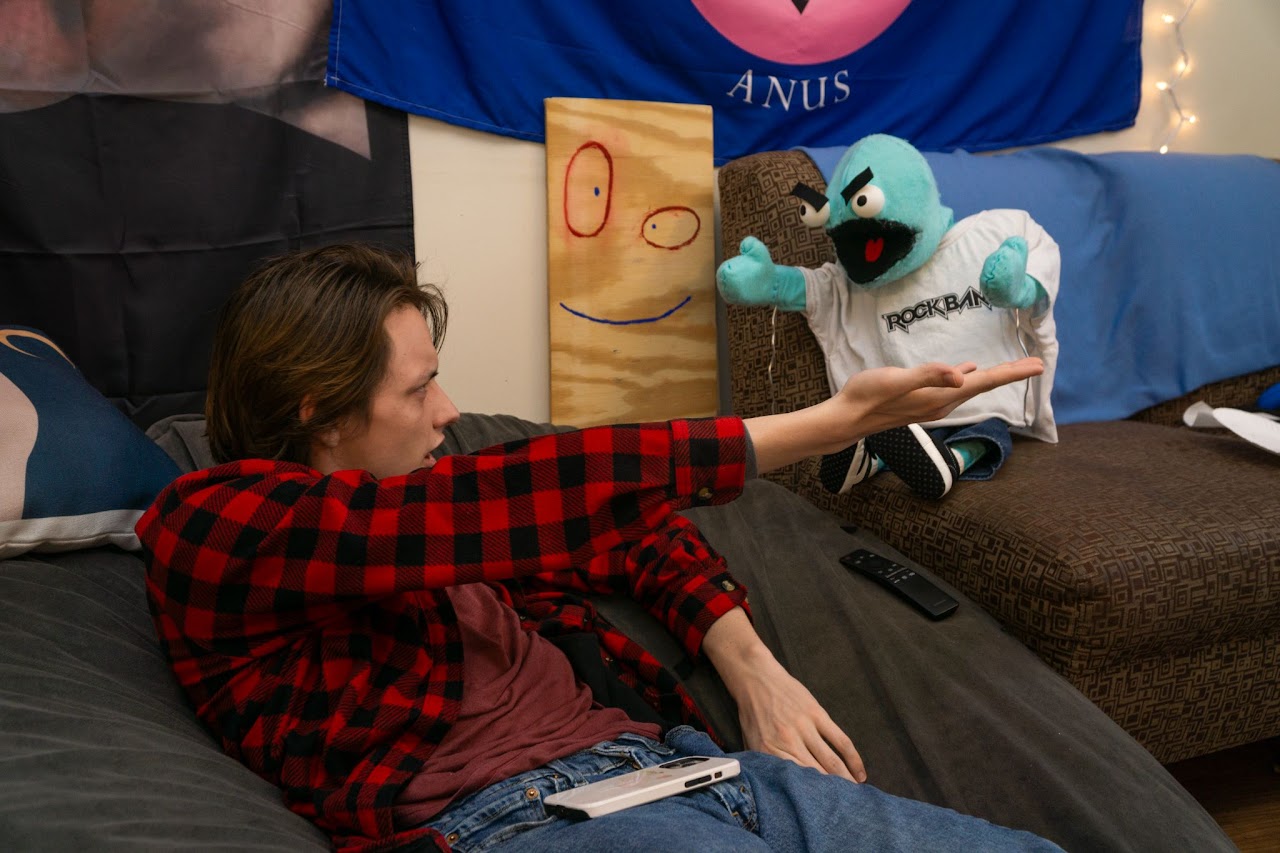
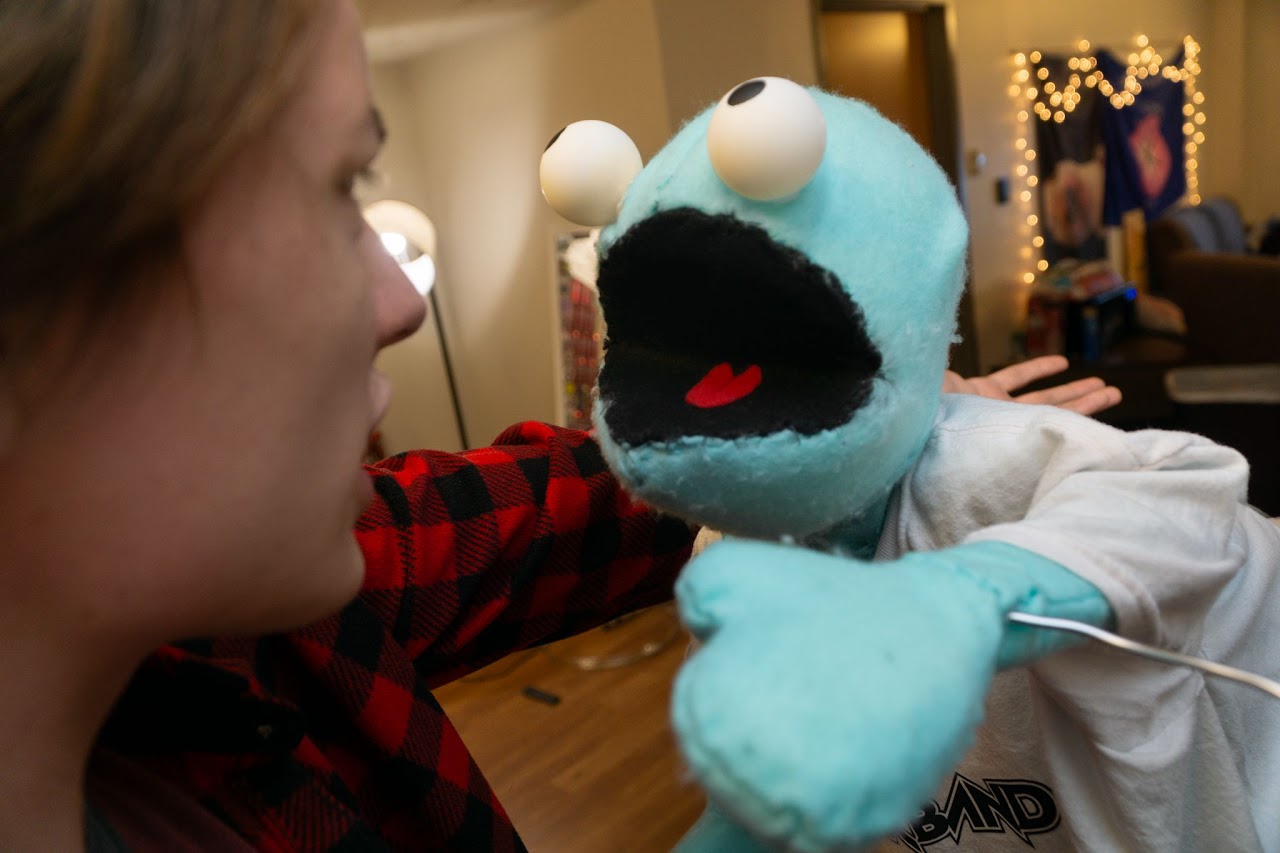
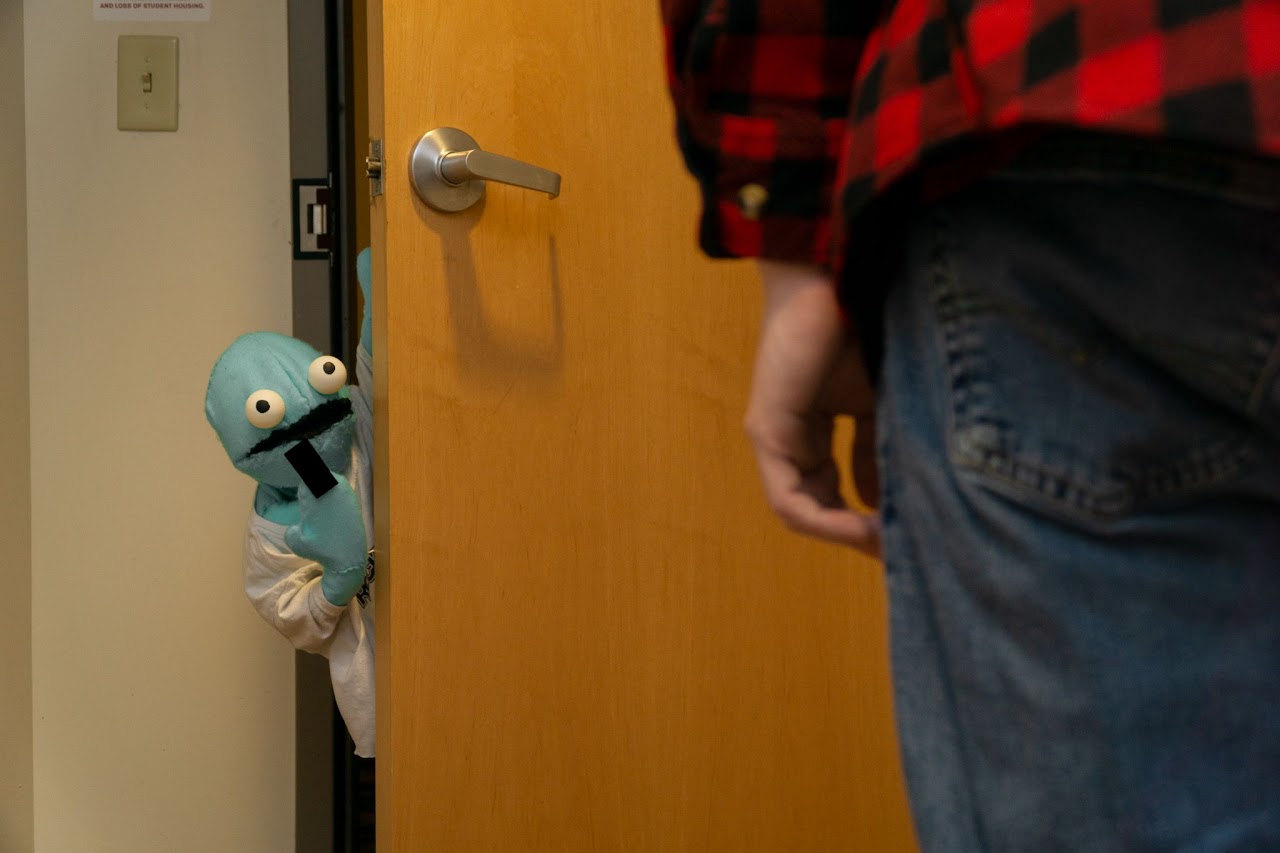
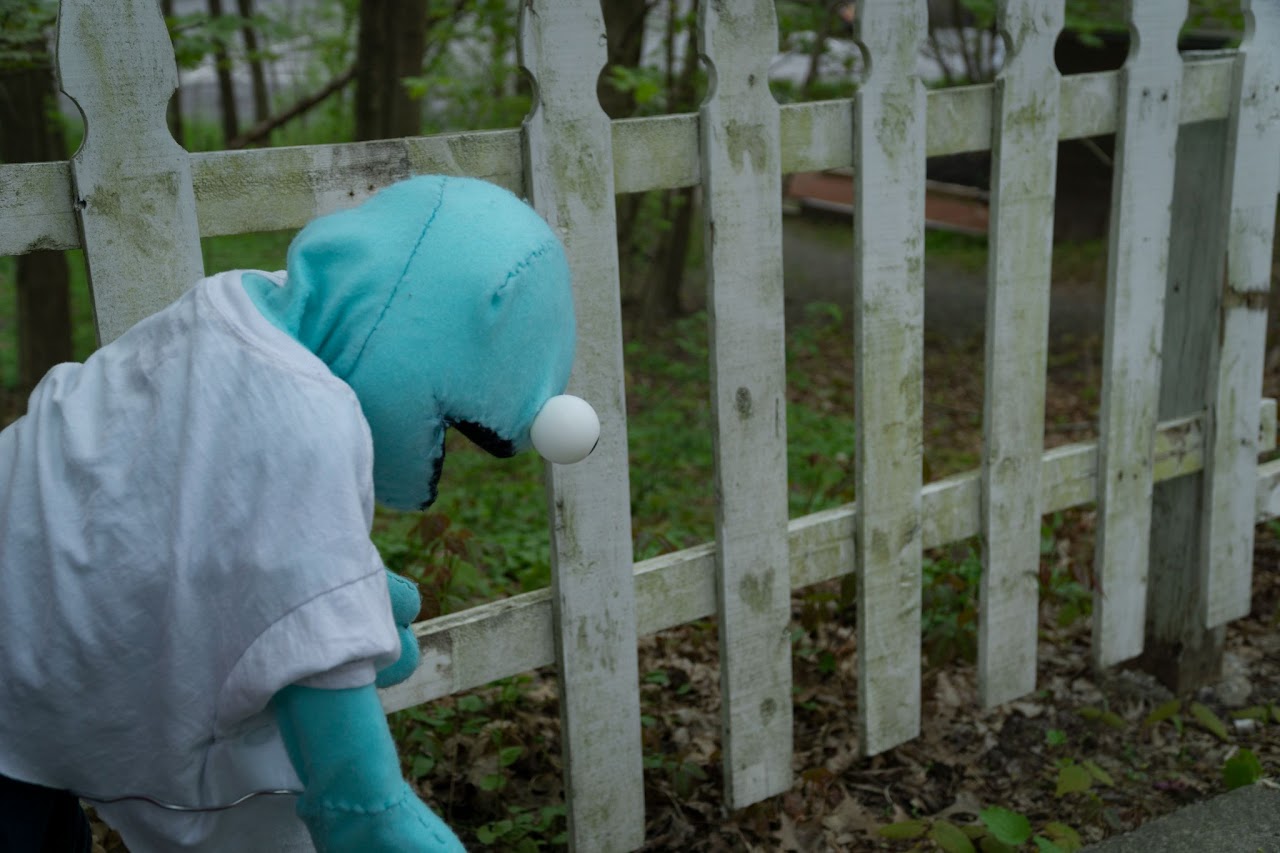
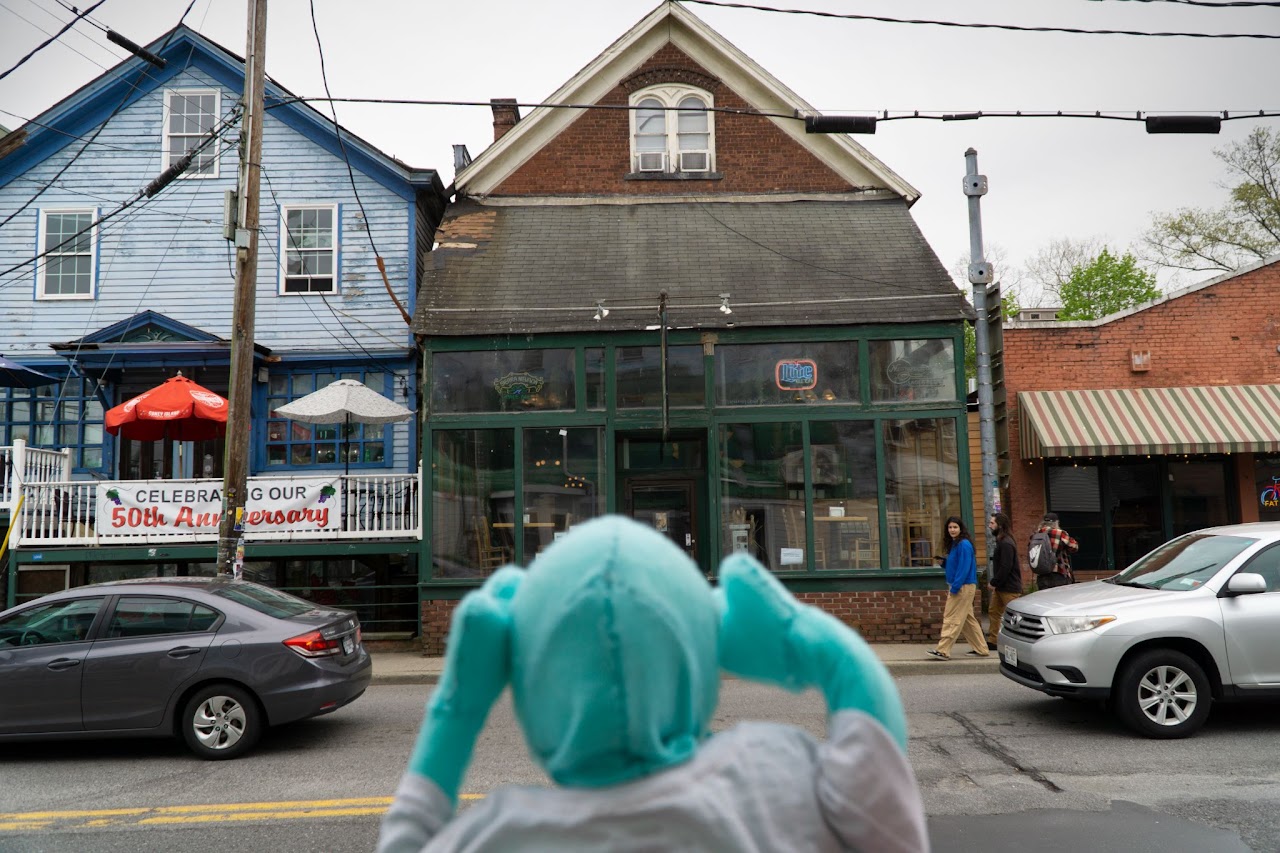
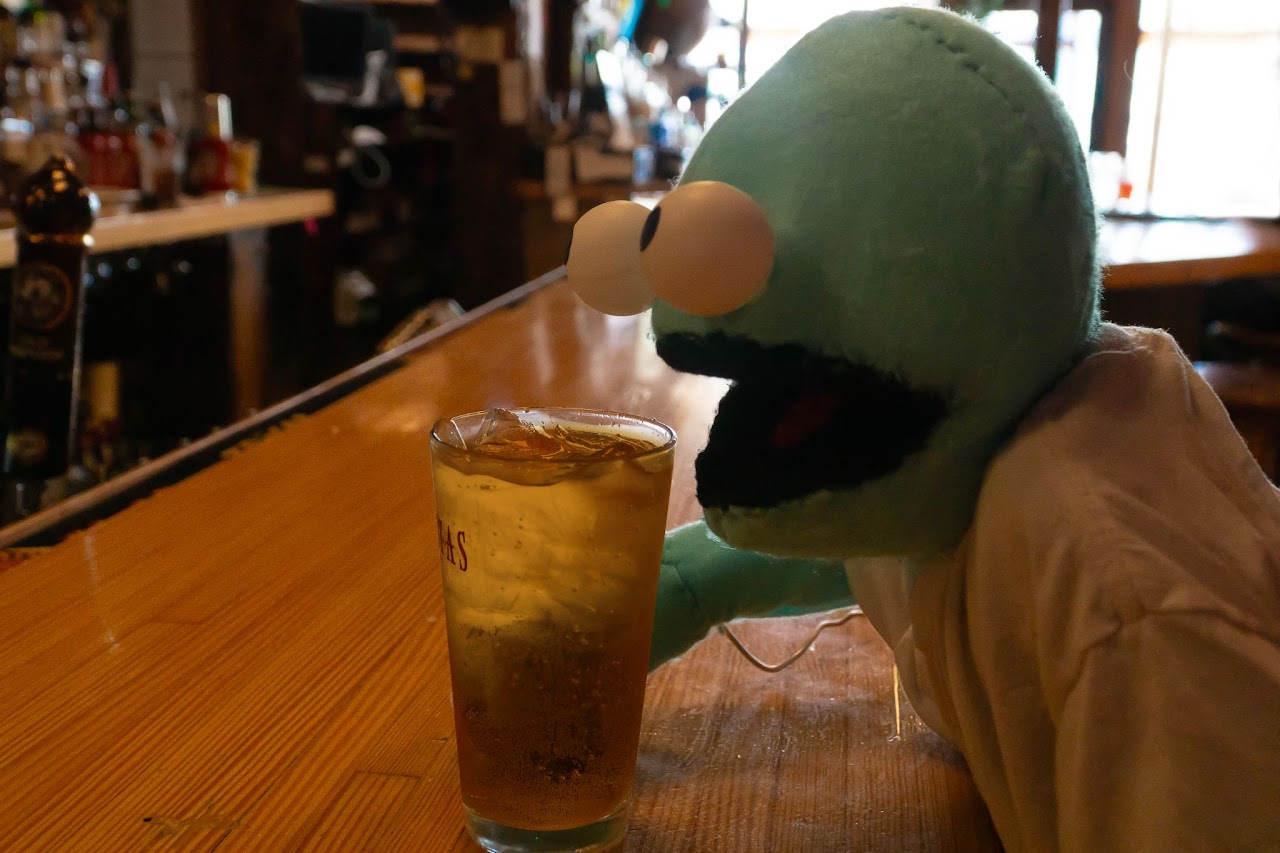
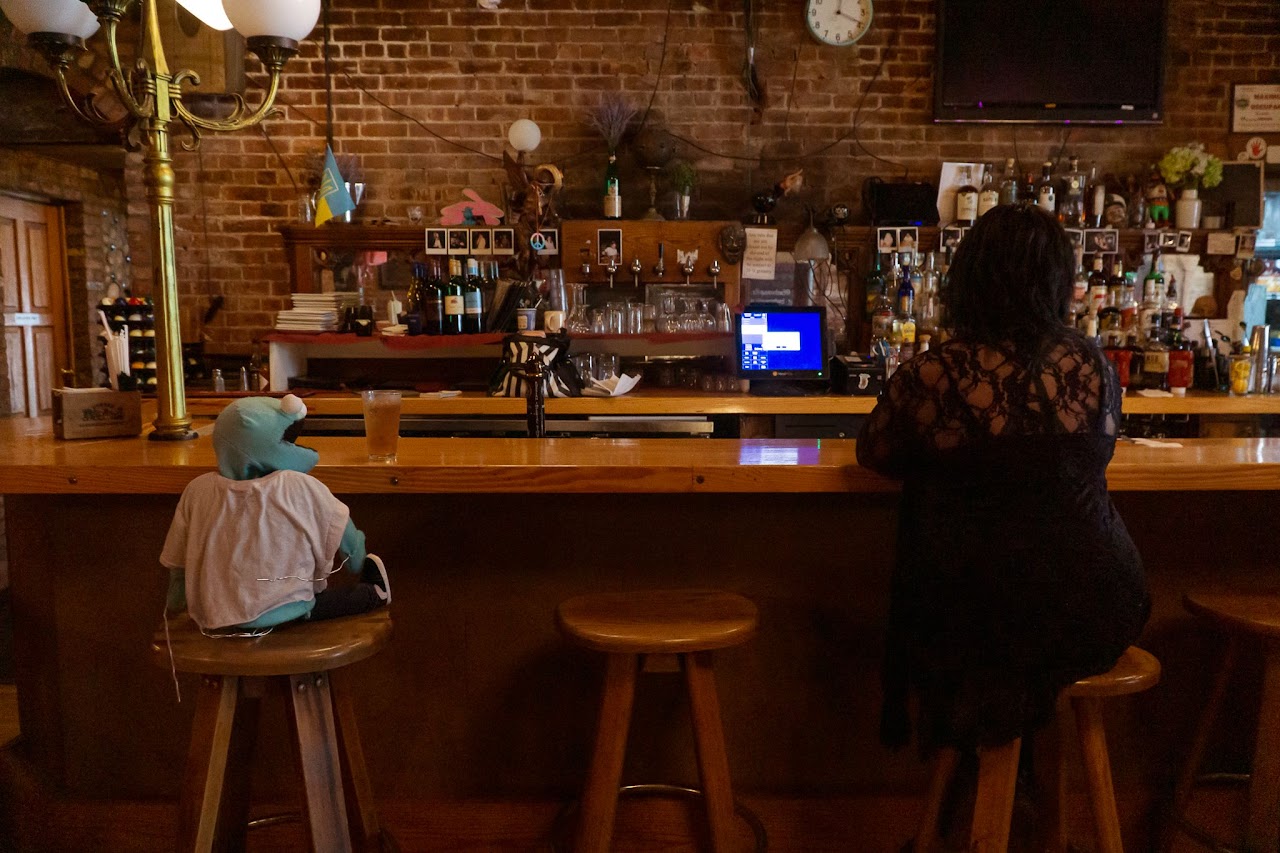
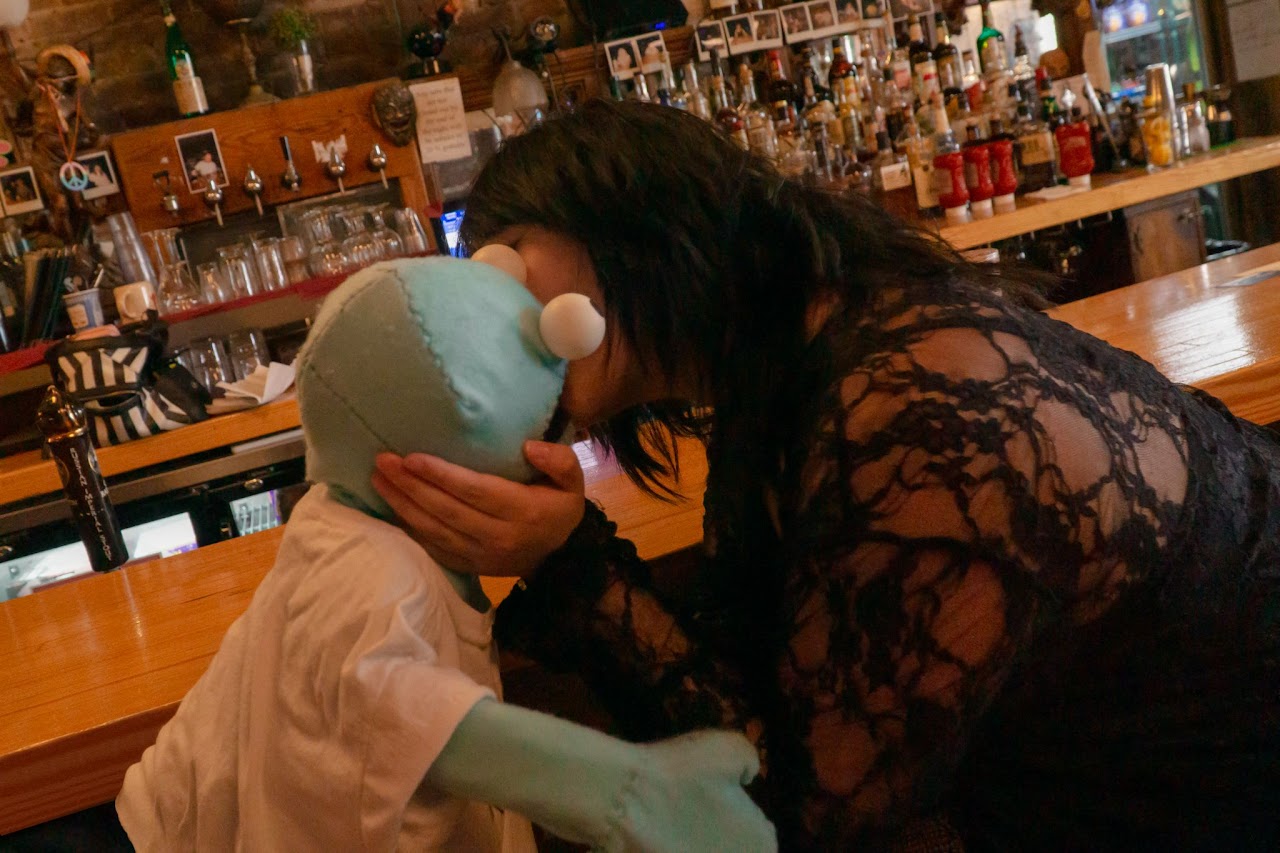
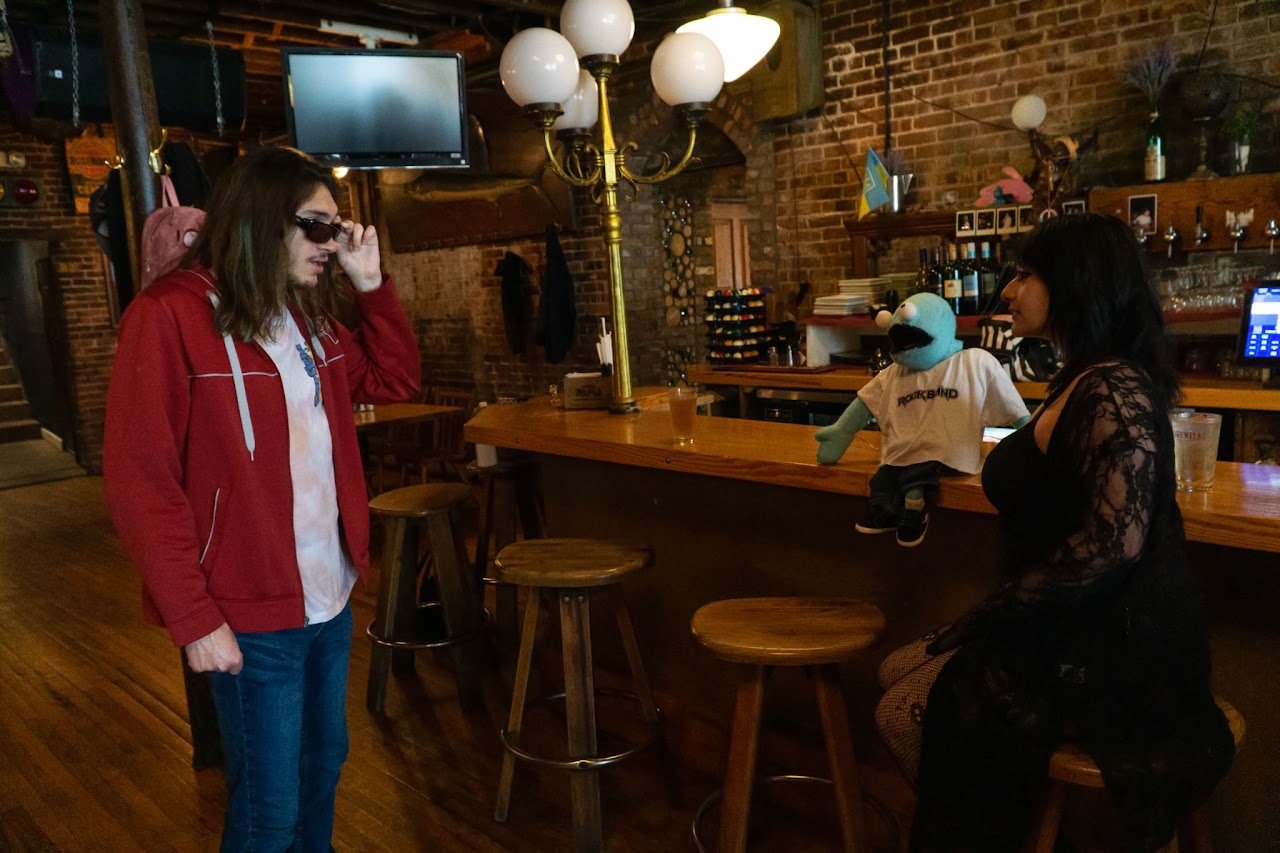
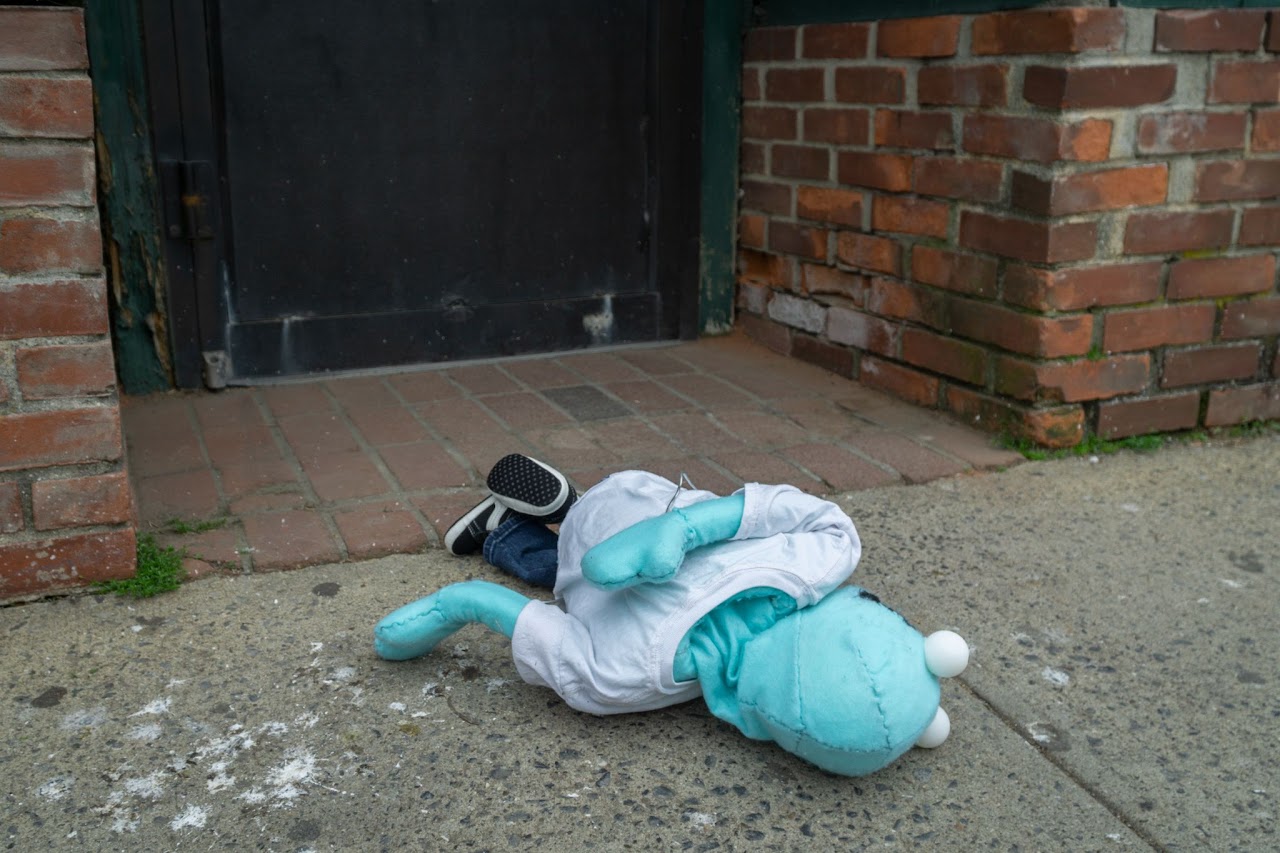
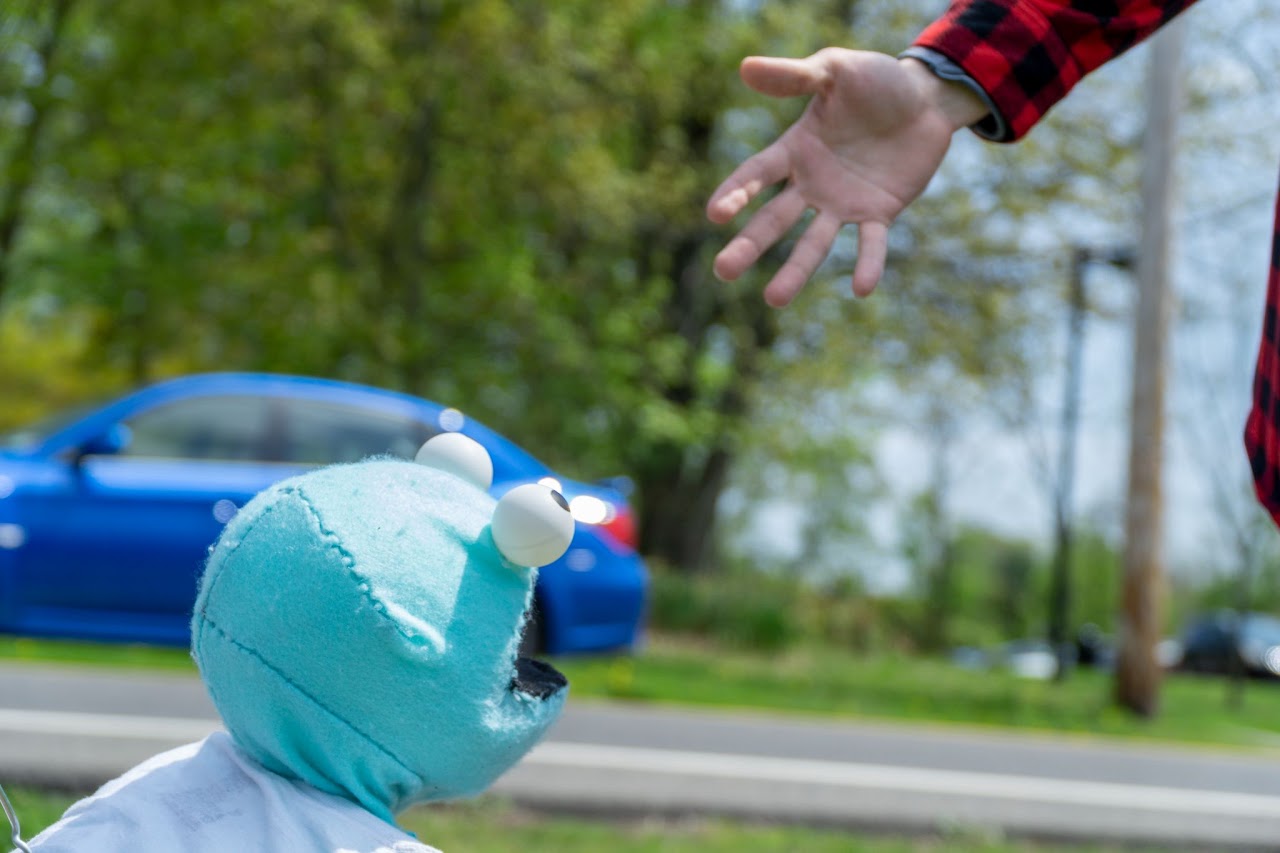
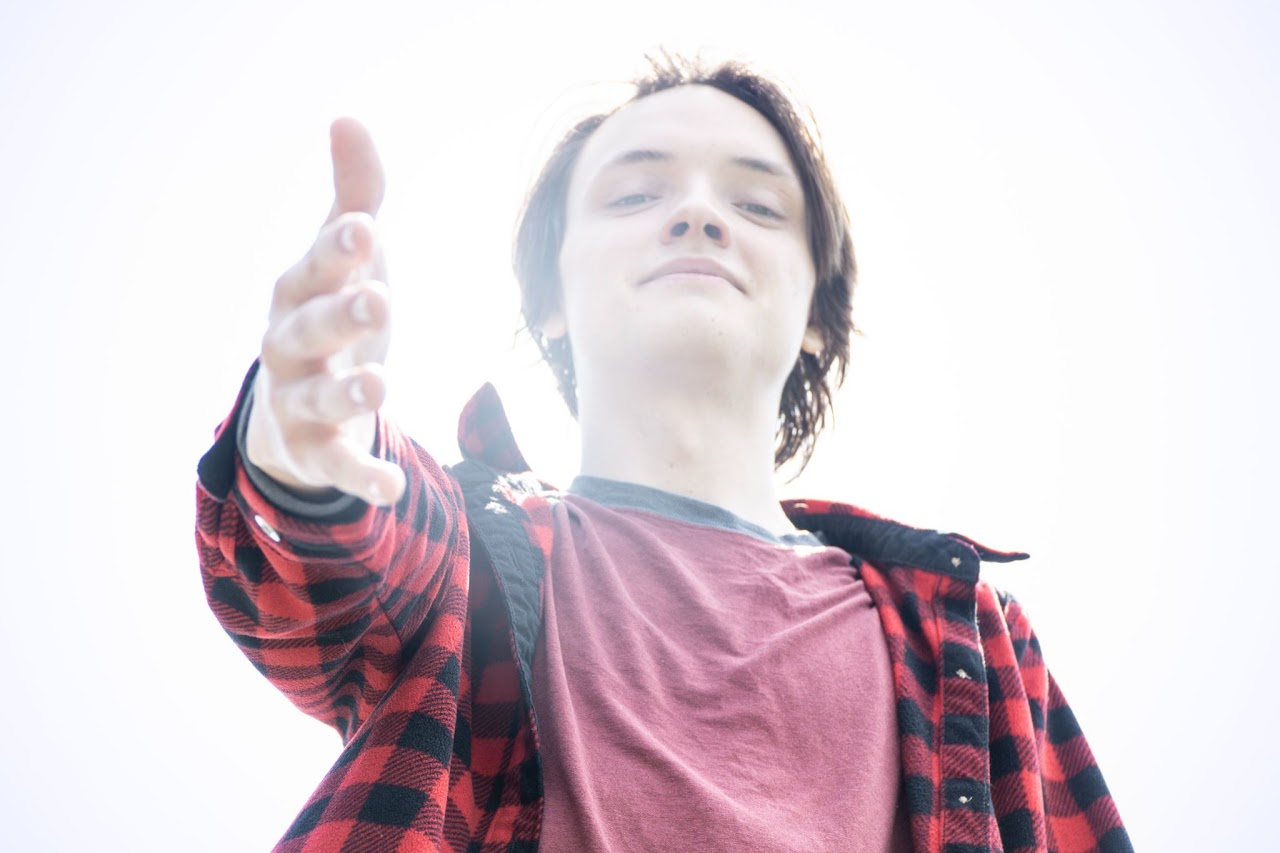
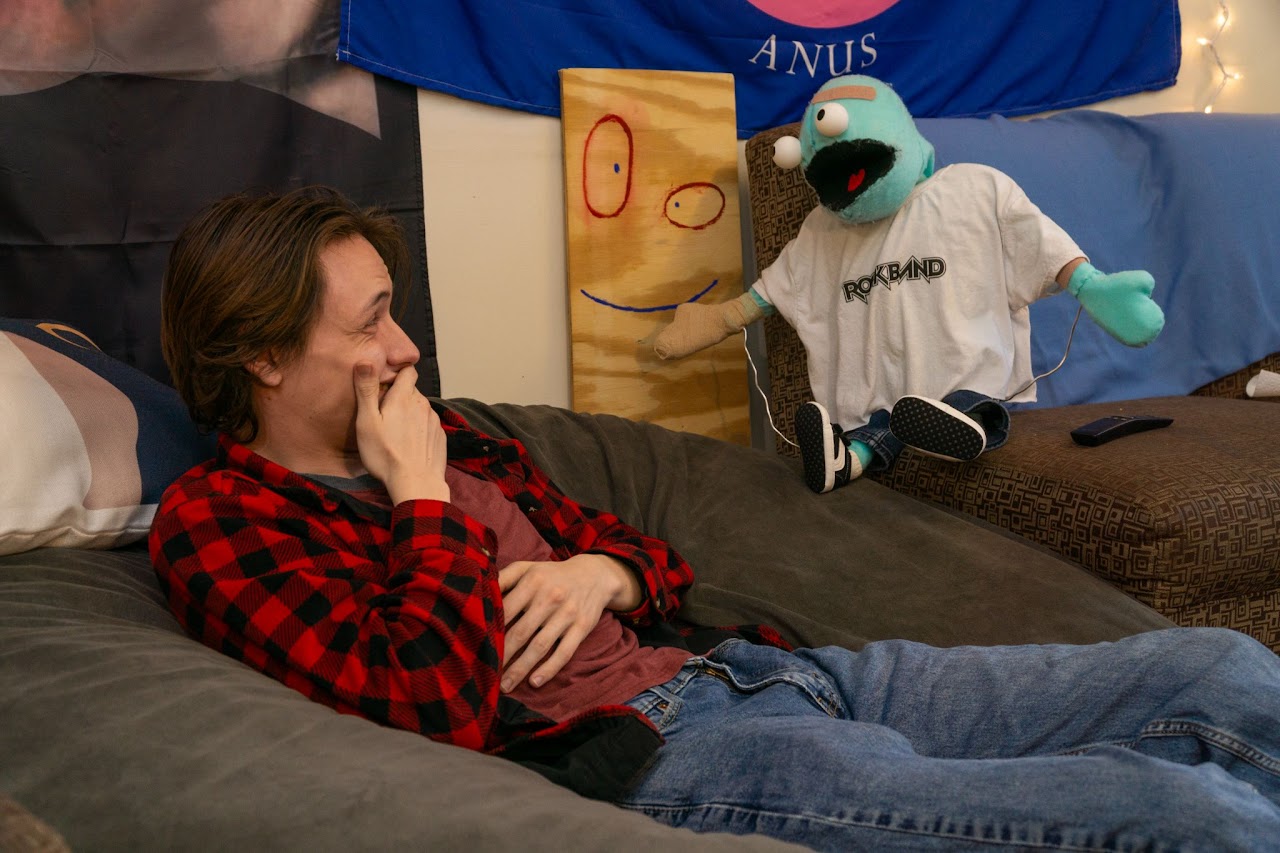
While Candice was writing the version of the character for “Chet Goes to the Doctor,” she was used to operating the puppet herself, so she wrote the role for herself, so she could portray the emotions she wanted the character to portray in the film. She was the main puppet operator throughout the series, with occasional help from crew members for the second arm, and Michael lending his body/voice for a shot or a scene for any number of reasons.
While ‘Chet’ as a character can be operated by different or multiple people outside the frame of the camera, live-action human characters usually require the same human people playing them in almost every shot. After pitching the script for “Chet Goes to the Doctor” to the college’s film club, Hawk Studios, and getting access to the film equipment, Michael and Candice hosted auditions for the human characters, the two with the most commitment required being main characters ‘Todd’ and ‘Jo.’ Candice would play Chet from under the table, and Michael would direct the actors from behind the camera, so they could review the footage and see who had the most believable on-screen chemistry with the non-human character.
The audition turnout was relatively small, around half a dozen people read for parts, most of them being brought by Candice’s friend Gavin DesBois. Mars McInerney, member of Hawk Studios and familiar with Candice through Gavin’s projects, gave a stellar performance as Jo. Mars’ years of on-camera performance and production work in high school made them one of the most experienced people on the Chet project, despite being by far the youngest. They completely sold Chet as a real person on camera, and with striking, bright purple hair, they were a shoe-in. Nicole Earle played the perfect confused straight-man as the one-off, red-herring ‘Doctor’ character. A few people read for the ‘Psychologist’ role, but Liam Gorelin delivered the lines with the exact emotional intensity the part was asking for. However, only one person came in to read for ‘Todd.’ The last audition was another one of Gavin’s friends, Dominic Cacchione, reading again for the Psychologist. He didn’t fit the role as well as Liam, but while he was there, Michael and Candice had him read a scene as Todd so there would be at least one backup. It wasn’t until watching the footage back and making the final casting decisions that they noticed Dom’s incredibly natural performance opposite the puppet. When asked, Dom and Mars both agreed to play their roles in not just “Chet Goes to the Doctor,” but that they’d keep playing the characters if ‘Chet’ would continue as a series.
After the first episode, the main ‘Chet’ cast was set. Any side character or extra roles would usually be offered to people Candice and/or Mike had worked with in the past instead of scheduling a ‘casting call’ day. As a student-run side project, only one episode of “The Chet Show” was being produced at a time, and as a consequence, the team had time to sit with each episode and see what worked and what didn’t. Dom and Mars became much more involved in the writing process, as the characters Todd and Jo evolved and changed with what they both brought to them respectively.
Michael's Character Design Doc:
Going back all the way to the first Chet project, the very first thing I ever had to consider was Chet’s character design.
Chet’s Character Design
Chet is a very simple little guy, and since from his conception he was the only puppet in the project I wanted him to exemplify that simplicity. This decision helped both Chet’s iconography and also the overall cost of the project. Looking at how the muppets designs their more humanoid puppets there are 4 main traits that differentiate them from how I produced the puppet that I feel should be noted:
- Hair - Right off the bat I did not want Chet to have hair, I felt that considering there were no other puppets in my project, him having hair would only needlessly complicate the design and overall just feel pointless.
- “Muppet” eyes - I don’t know what else to call this trait, but muppet eyes are very specific in how they’re made; produced from a mold the muppet eyes resemble more of a dome than a ball. I attempted to replicate the look but due to the low budget I stuck to pingpong balls. Ultimately I like this decision more because it provides a more defined silhouette which I’ll discuss more later.
- Nose/ears - I didn’t wanna give Chet a nose or ears as I felt with the weird eyes and no hair. I wanted to hit a middle ground between human and creature puppet and I felt these traits would compromise that goal.
- Fitted Clothes - I decided against fitted clothes as I wanted to design Chet after a more 2000’s clothing aesthetic; baggy tee, blue jeans and skate sneakers. Chet’s shirt rather than being a puppet’s shirt or a baby shirt is actually a modified boy's small white tee. Typical puppet clothes are very fitting, and always look nice, but I felt that wouldn’t fit Chet’s newly forming character and would also compromise a unique silhouette.
Puppet Silhouettes
When creating characters, silhouettes are one of the most important aspects to focus on. While I wanted to keep Chet fairly humanoid, I wanted to avoid the generic human puppet look…
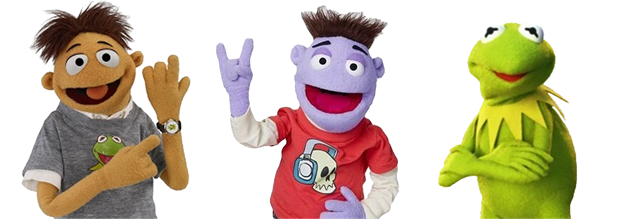
A common issue with generic human puppets is that their silhouettes tend to be fairly uniform. In this example there are 3 silhouettes all with puppets who are recognizable to almost anyone:
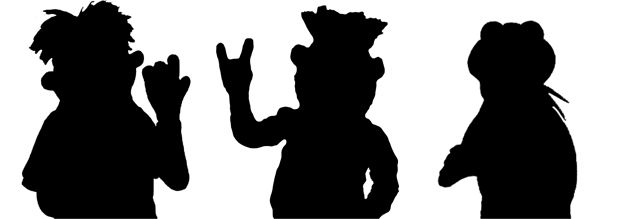
However, I’m guessing most reading this could only recognize one: Kermit
This distinctive look is something I wanted to achieve, as most famous monster/creature puppets have a distinctive look that create a unique silhouette, making them instantly recognizable
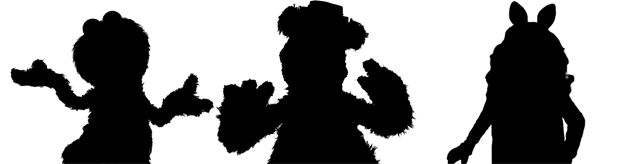
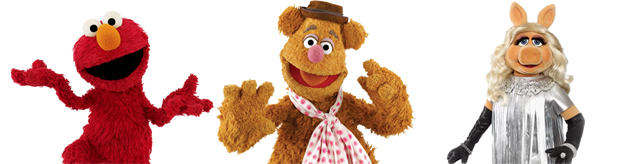
Chet was fairly limited in terms of the head-shape I could use. Due to my lack of experience I had to use a free-template to make his head and body (provided by “The Puppet Guy” on youtube), so all unique features would have to work as silhouette-builders despite a more generic puppet head and body shape:
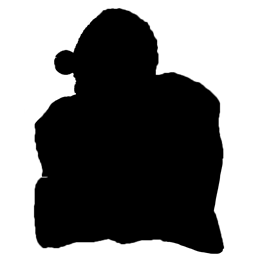
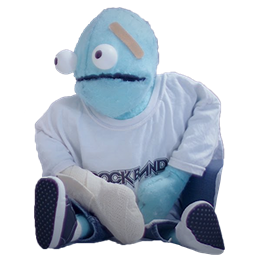
I feel that the generic headshape overall helps in his character design, his bulbous elmo-like pingpong ball eyes and baggy clothes alone create a shape that can make someone think “oh yeah that’s chet” while remaining in-budget and simple.
Cuteness and Simplicity: How the Human Brain Recognizes "Cute" Characters (and how to limit that cuteness)
When designing an appealing character the idea of “cuteness” comes to mind, especially with a medium often associated with such ideas like puppets. So when designing Chet, while I wanted him to still be a little grungier than the average muppet, I wanted him to still follow the rules of cuteness to some degree.
It’s common knowledge that when designing a cute and/or mascot character typically excessive detail should be avoided. Mickey Mouse is mostly made up of 3 circles. Spongebob is a square in pants, and Garfield is an orange cat with big eyes. All these characters are iconic due to their recognizable shape and simple features.
While the idea of simplicity and making something memorable is fairly common knowledge, did you know that cuteness, much like many other traits, can actually be traced back to the human brain and how we relate these “cute” traits to babies?
This article goes over the idea of Baby Schema, a phenomenon in the human brain that attaches the traits of babies to the idea of cuteness. Big eyes, big lips, button noses, puffy cheeks, and small bodies with disproportionately large heads. These traits can be attached to other things humans find cute; dogs, cats, cartoons, and most importantly for this case, puppets.
With this in mind, Chet would already have a majority of these traits to make him cute, big eyes, large head on a small body and big lips/large mouth. Thankfully in my case, removing the nose (a step I was already considering) would help push Chet towards that perfect middleground I was hoping for.
Displaying Personality Through Clothing
Endearing yet obnoxious is a trait I really wanted to apply to Chet on inception, as funny as he may look, I also wanted him to be slightly unlikable so that if something cartoony such as some slap stick violence happens to him, you’d laugh rather than feel bad.
To achieve this I decided to make him dress like a burnout college student, complete with skate shoes, unwashed blue jeans and an oversized shirt with some sort of logo on it. I ultimately decided on a RockBand logo, as it reminded me of the show 30 Rock's “How do you do fellow kids” clip, and that is funny to me.
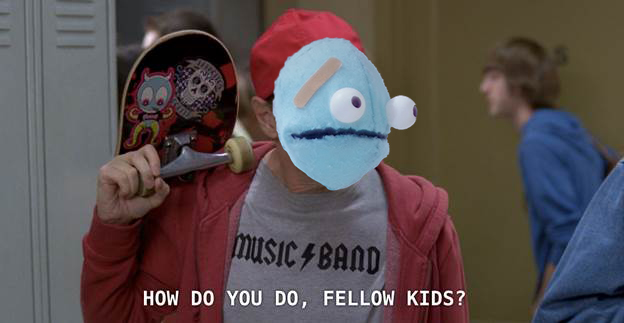
It makes Chet seem inherently punchable and pretentious.
Side Note: Chet’s Color
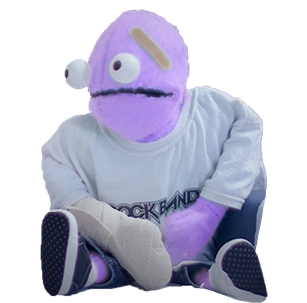
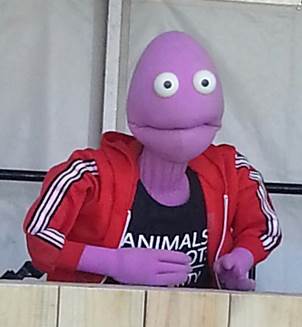
Chet’s iconic blue hue was almost purple, fun fact. I knew I always wanted a cool color for Chet’s skin, as I felt it fit the character I was making. However after discussing with some friends it was decided the purple would look similar to Randy Feltface, a comedian who uses a purple puppet when doing his standup, so light blue was picked instead.
Ultimately I’m glad this change happened,
the color theory of “The Chet Show” is something I’m very happy with and him
being anything other than blue would just feel wrong in that sense. Chet is our
beautiful blue boy, and I wouldn’t have it any other way
